If you want to get to know Ireland, there’s no better way than to do so behind the wheel. Driving past the country’s lush green fields, towering cliffs, and rugged coastline—with an inevitable detour to a local pub—is an experience that allows you not just to see, but truly connect with the heart of the country through its people. This is exactly what the co-founders of Stable of Ireland, Sonia Reynolds and Frances Duff, did 15 years ago, and in doing so had chance encounters that led them down a road to discovering some of the best Irish makers around the country.

Traveling the length and breadth of Ireland—circling the lunar-like landscape of The Burren in County Clare and traversing the untamed countryside of Donegal—the pair encountered extraordinary people facing what had become an ordinary problem: the rapid disappearance of their craft. “We met with linen and wool weavers and were blown away by the exceptional quality and beauty of the cloth they produced, as well as the depth of [textile] history in Ireland,” says Reynolds. “We were in equal measure concerned by the decline in the number of weavers. They mentioned that they were losing out to cheaper cloth from abroad and that Irish buyers were few and far between.”
The friends and business partners FIRST met working as models for renowned fashion photographer Mike Bunn. “Mike was deeply inspired by the Irish landscape and textures and clothing. As two redheads, he often used us for his own shoots styled with his wife Betty, which were about a visual celebration of what Irish style and the country meant to him,” says Reynolds. “It was these early experiences that planted the seeds for the love of all things Irish.”

In 2014, the pair co-founded Stable of Ireland with a focus on traditional Irish textiles and weaving heritage: their debut collection was launched in a pop-up shop featuring unisex scarves in Irish linen and oversized herringbone fringed scarves woven by Eddie Doherty, a celebrated maker from Donegal. Two years later, they set up shop at The Westbury Mall, just off Grafton Street, Dublin‘s busiest pedestrian thoroughfare, and stocked it with Irish linen scarves in every color of the rainbow and tailored gilets and blazers made from handwoven tweed. The store, now in its tenth year, is designed like an artistic pied-à-terre, a place where you can linger and learn the stories behind each piece.

It’s those stories that anchor Stable of Ireland in its mission to champion the Irish textile industry by working with makers from remote corners of the country—and through them, bring forgotten pieces of heritage into in a modern context. In the late 19th century, Ireland was the largest manufacturer of linen in the world, but the emergence of cheaper factories and synthetic fabric post-WWII led to the decimation of local industry; today, there are only a handful of Irish linen manufacturers left, even as the superior reputation of the fabric remains. And although wool also comes to mind when you talk about Irish textiles, the linen trade thrived at one time, too, in part, because of the suppression of Irish wool production, which the English saw as direct competition to their own industry.

The Inis Meáin Knitting Factory in the Aran Islands, which works with Oscar-nominated costume designer Eimer Ní Mhaoldomhnaigh.
That didn’t stop the nation’s weavers working with wool, though: sweaters embedded with meaningful patterns and intricate Crios belts continued to be knitted quietly inside cottages, a homegrown effort to keep the craft alive. Take aran, which is arguably the most recognizable expression of this history, and was spotlighted in the Oscar-nominated film Banshees of Inisherin by costume designer Eimer Ní Mhaoldomhnaigh, who sourced striking wool designs that stole the show. These kinds of pieces continue to be crafted in the Aran Islands by the likes of the 50-year-old Inis Meáin Knitting Company, which is stocked in over 60 stores worldwide including Bergdorf Goodman in New York.


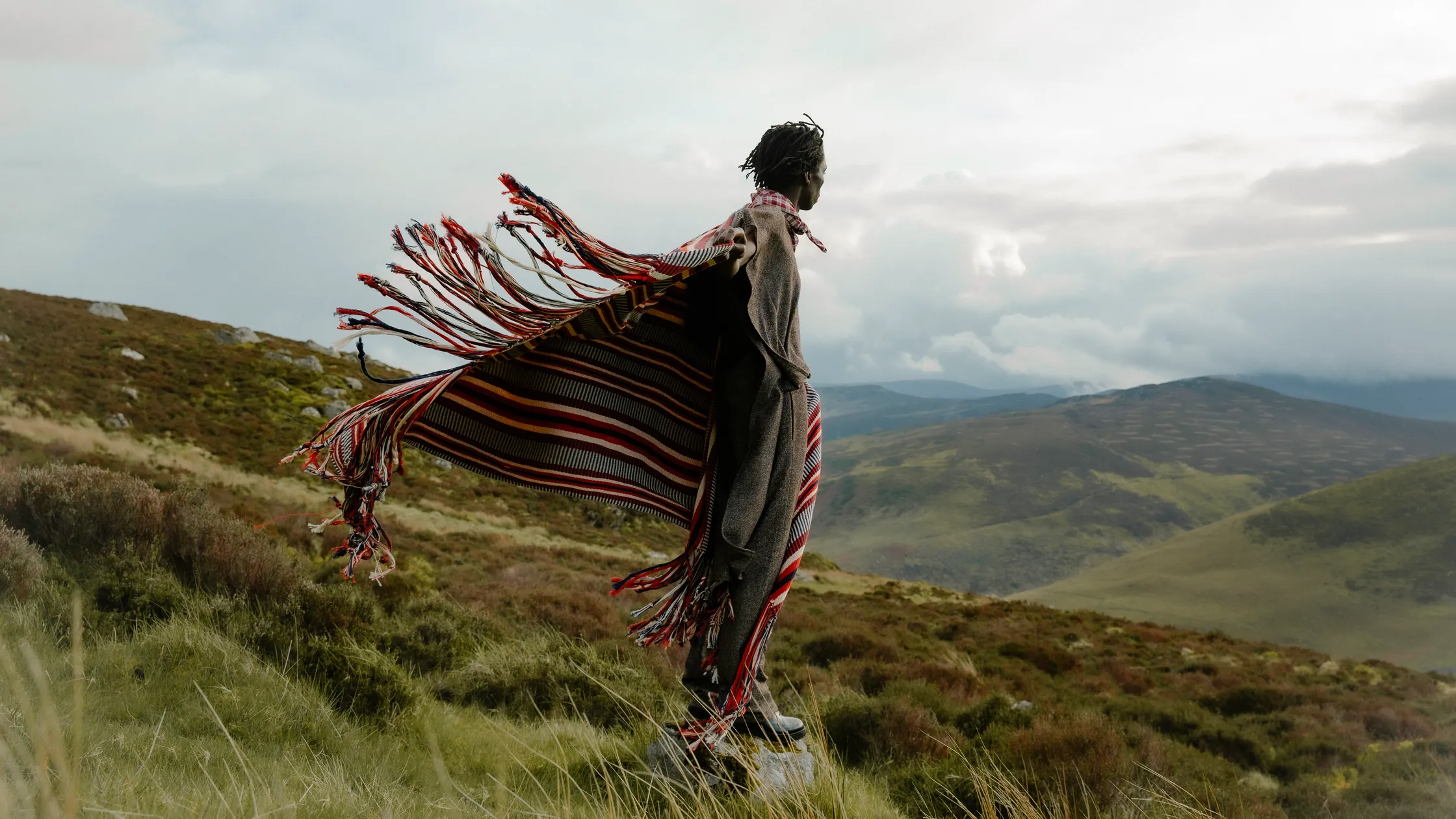
And among the windswept hills of Donegal, efforts are underway to fortify another Irish fabric for the future: Donegal Tweed. The region is home to the largest concentration of tweed and wool weavers in Ireland, and they are currently in the final stages of securing Protected Geographical Status from the EU for the natural fibre twill—just as Champagne from the Champagne region of France has. This will eventually mean that only tweed made in Donegal will be allowed to be marketed as such, helping to prevent imitations and retain jobs. It’s a shift that directly supports the makers themselves—something Stable of Ireland has long prioritized through its partnerships with producers like Eddie Doherty, Molloy and Sons, and Studio Donegal who create cloth for their tweed jackets, gilets, and coats.
This article first appeared here.